
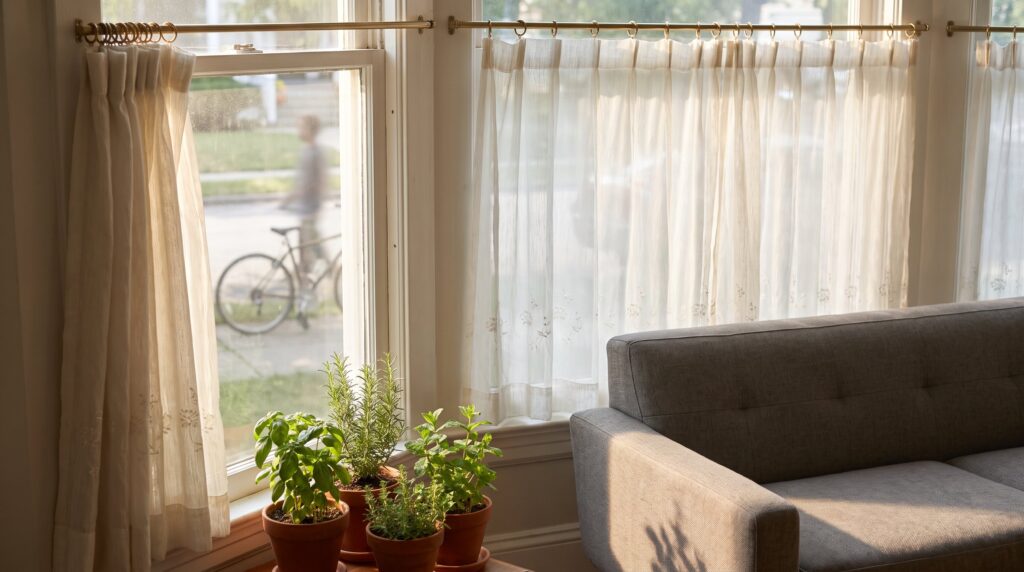
Net Curtains for Privacy Without Losing Natural Light are a simple, low-cost way to keep daylight while stopping direct sightlines. They let rooms feel bright, reduce street-facing visibility during daytime, and layer easily with heavier drapes for night privacy. This guide shows which net styles work best in kitchens, living rooms and bathrooms, how weave and placement change performance, practical measuring and mounting tips, and care steps that extend fabric life. It aims to help readers choose fabric and installation that preserve natural light without sacrificing everyday privacy.
主要要点
- 蚊帐窗帘在白天保护隐私的同时最大化自然采光,适合街面窗户使用。
- 选择适当的网眼密度和平纹可根据需求平衡采光和隐私,如松散织物增亮密织织物提高遮挡。
- 多种网纱类型(如纯纱布、蕾丝、浮雕纹理)提供不同的视觉效果和隐私保护效果。
- 准确测量窗户尺寸并增加20%-50%的宽度以确保窗帘 fullness 和侧边隐私。
- 将网纱窗帘靠近玻璃挂起并结合更厚重窗帘层叠,实现昼间光线充足且夜间隐私保护。
- 定期轻柔清洗和适当保养可延长窗帘使用寿命,保持透光性和颜色鲜艳度。
Why Choose Net Curtains For Privacy Without Losing Light
Net curtains deliver one clear benefit: daytime privacy while retaining daylight. Unlike blackout drapes that cut light almost completely, net curtains scatter incoming sun and keep interiors visible to occupants but vague to passersby. This matters on street-facing windows where someone standing three meters away can see shapes but not faces.
Net panels also reduce glare and soften harsh sunlight, improving comfort for TV viewing or houseplants. For homes with small windows, light-reflecting colors such as white or ivory increase perceived brightness. For families weighing sleep needs against daytime comfort, heavier blackout curtains work for night, parents often combine those with nets for daytime use. A recent buyer guide for nursery blackout options shows how layered treatments solve both needs, especially when sleep or darkening is required during daytime naps (best blackout curtains).
Practical trade-offs are simple: choose a looser weave to maximize light or a denser pattern to improve privacy. Net curtains fit nearly any room and cost far less than motorized blinds, making them a smart, low-risk upgrade.
Types Of Net Curtains And What They Offer
Plain voile, lace net, embossed textures and embroidered nets each produce distinct light and privacy effects. Plain voile gives the most uniform brightness with minimal patterning and is ideal where uninterrupted daylight matters. Lace nets introduce patterned opacity: floral or geometric motifs hide outlines in patterned areas while still admitting light through open threads.
Embossed or textured nets add visual depth and can interrupt sightlines more effectively than plain weaves of the same weight. Embroidered nets place opaque threads in specific zones, so privacy improves where stitch density rises, useful for lower halves of windows where neighbors walk by.
Ready-made panels suit standard openings and cost less: custom-made panels fit bay windows and unusual heights, preventing side gaps that ruin daytime privacy. When choosing, consider how the window faces the street and how much detail the occupant wants to hide: a tight-patterned lace masks more than a loose voile.
For a full practical primer on styles, installation and trade-offs, readers will find an expanded overview in the site’s comprehensive resource on net curtains (complete net guide).
Materials And Weave Density
Weave density determines the core balance between privacy and light. A looser weave transmits more daylight but reveals more movement and shadow. A tighter weave blocks line-of-sight better but reduces lux levels by a measurable amount.
Common materials:
- Polyester: Durable, resists creasing and most washing, and holds weave shape. It’s the best option where frequent cleaning is needed.
- Cotton: Softer hand and natural texture but may shrink if washed hot.
- Linen blends: Offer a textured, slightly heavier drape and moderate light control.
- Voile fabrics: Lightweight and airy: available in synthetic or natural fibers.
Practical measure: swapping a loose voile for a mid-weight lace can drop incoming light by about 10–25% while dramatically increasing daytime privacy. If a specific room needs both brightness and added privacy, choose patterned weaves that concentrate opacity near the lower third of the panel.
For help matching fabric to window shape and sun exposure, the site’s fabric selection article explains trade-offs and recommended fibers (choose fabric).
Measuring, Mounting And Installation Tips
Measure the window width and drop accurately before ordering. The first step is a clear fact: add 20–50% extra width in total for gathers: this creates fullness and improves privacy at the sides. For a 120 cm window, order panels totaling 144–180 cm in width combined.
Mount the rod above the frame to make a window read taller. Extending the rod 10–15 cm beyond each side eliminates side light gaps when panels close. For renters or glass doors, a tension rod placed inside the frame gives a no-drill option.
Use rings for easy sliding, or hooks if fabric weight is light. If the net hangs close to the glass, privacy increases because the fabric disrupts direct sightlines: placing the net 5–10 cm from glass is a practical sweet spot.
A precise measuring method is detailed in the site’s measurement guide, which helps avoid common mistakes like underestimating fullness or cut lengths (measure windows).
Placement Tricks To Maximize Light And Privacy
Place the key insight first: position and layering control performance as much as fabric choice. Installing a sheer net close to the glass keeps light soft but distorts sightlines: layering a heavier curtain or Roman blind higher or behind the net lets occupants control privacy without blocking daytime brightness.
Tactics that work:
- Lower-sheers: Fit a shorter net to the bottom half of the window where passersby see in most, and leave the top half uncovered for light.
- Double-track rods: Hang nets on the inner track close to glass and heavier curtains on the outer track for instant transition from daylight privacy to full darkness.
- Color choice: pale tones reflect light and keep rooms brighter: darker nets reduce perceived light and increase privacy.
Example: a kitchen with a street-facing sink installed a lower-hem net, which preserved morning light for plants while preventing sidewalk visibility between 7–9 a.m. These small choices reduce the need to close heavy curtains during the day and keep rooms feeling airy.
Care, Cleaning And Longevity
The main actionable fact: gentle care extends net life and preserves translucency. Most polyester nets tolerate machine washing on a gentle cycle and return to shape with low-heat tumble or air drying. Cotton and linen blends should be washed on cooler cycles to avoid shrinkage.
Specific steps:
- Remove hooks and rings before washing to reduce tearing.
- Use a mesh laundry bag for delicate embroidered nets.
- Avoid chlorine bleach: use oxygen-based whitening only if the label permits.
- Iron on low heat if needed, or steam while hanging to remove wrinkles without flattening weave texture.
A real-world lesson: a reader shared that washing embroidered nets at 60°C shrank panels by 4 cm in length and distorted motifs, temperature control prevented repeat damage. Regular dusting with a soft brush or weekly vacuuming with a brush head reduces discoloration and slows dust buildup, preserving translucency and the original color for years.
Conclusion
Net curtains let daylight dominate while keeping daytime privacy practical and affordable. With the right material, accurate measuring, and thoughtful placement, they reduce sightlines without creating a cave. Use nets close to glass, layer when nights require darkness, and follow gentle-care routines to preserve fabric and brightness. For a deeper jump into styles, measurements and full installation checklists, the site maintains a broader resource that complements this guide.