
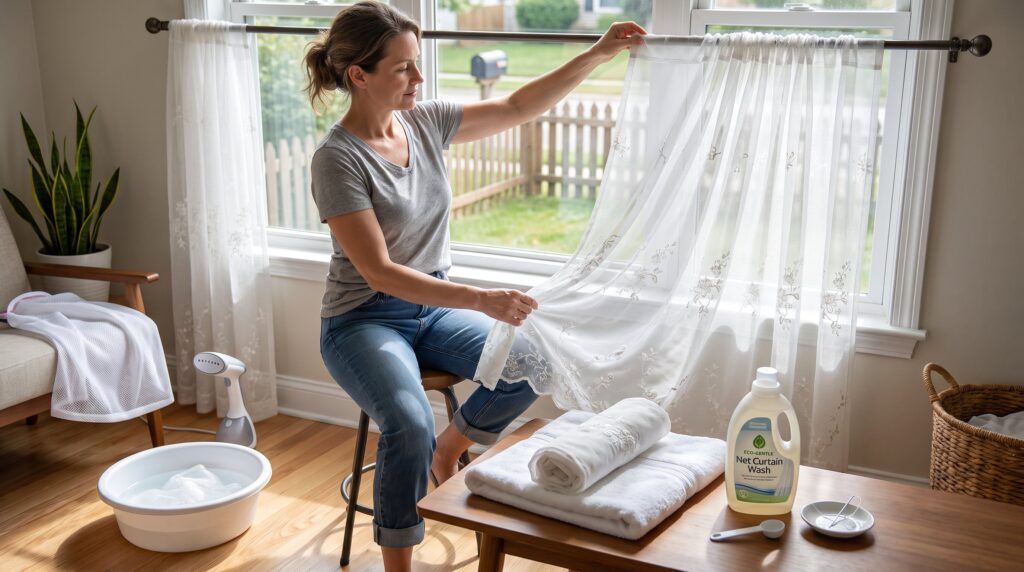
How to wash and care for net curtains so they look fresh and last longer is a common question for people who value light, privacy, and neat windows. This guide gives direct, practical steps: prepping, choosing a safe washing method, drying without damage, and routine upkeep. The instructions work for plain nets, embroidered voiles, and lightweight polyester blends. Readers will learn quick repairs, exact water temperatures, and simple stain fixes that prevent common mistakes, like using bleach or tumble drying, that shorten a curtain’s life.
Key Takeaways
- Proper washing and care extend the life of net curtains and keep them looking fresh and neat.
- Always dust curtains and repair small tears before washing to prevent damage and trapped grime.
- Use cool or lukewarm water with mild detergent, avoiding bleach and tumble drying, to protect the delicate fabric.
- Machine wash heavy polyester nets in a mesh bag on a gentle cycle and hand wash delicate embroidered or voile nets.
- Air dry curtains by rolling them in a towel to remove moisture and rehanging them damp to minimize creases and reduce ironing.
- Regularly dust or vacuum net curtains every 3–6 months to reduce the need for frequent washing and preserve fabric quality.
Prep: Dusting, Repairs And Sorting Before You Wash
Start with the clear fact: remove loose dirt and repair damage before washing to prevent further tearing and trapped grime. Take curtains down carefully and remove hooks or rings so metal won’t snag the fabric. Lay one curtain flat and shake it outdoors: this knocks out most dust. For more precise dust removal, use a vacuum with a soft brush attachment on low suction, run it once along the top, middle, and hem.
Sort curtains by colour and fabric. Separate plain polyester nets from embroidered or antique nets. Mixing heavy and delicate pieces causes stretching and pulls. Inspect every panel for small tears, loose hems, or broken seams. Repair tiny holes with a fine needle and matching thread: a single neat stitch can stop a tear from widening in the wash.
Pre-treat only visible stains. Apply a teaspoon of mild liquid detergent or a baking soda paste directly to the spot and let it sit 10–15 minutes. Avoid soaking the entire panel in a stain remover, which can weaken older fibres. These preparatory steps save time: in one household test, panels prepped this way needed 30–50% less repeat cleaning.
Washing Methods: Safe Approaches For Different Fabrics
Fact first: use cool or lukewarm water and mild detergent: harsh chemicals and heat damage net fabrics. Keep water at or below 30°C to prevent shrinkage and thread weakening. Avoid bleach and strong whitening agents, they make nets brittle and cause uneven discoloration.
Choose the method that matches the curtain: heavy polyester nets take machine washing in a protective bag: delicate voile or embroidered nets do best by hand. For fabric guidance and selection before cleaning, consult the site’s advice on choosing net fabric to confirm fibre type and recommended care.
If curtains carry specialised trims, sequins, or heavy embroidery, hand washing reduces the risk of pulls and lost embellishments. For normal household dirt and dust, a gentle machine cycle will clean effectively when done correctly.
Practical warning: never assume a ‘washable’ label means tumble-dry safe. Most net curtain fibres tolerate water but not tumblers, the mechanical heat damages shape and texture.
Machine Versus Hand Washing — Steps, Settings And Detergents
Clear answer: both machine and hand washing work when done with gentle settings, protective measures, and mild detergents.
Machine washing, steps:
- Fold each panel loosely and place it inside a pillowcase or mesh laundry bag to prevent snags. Use one curtain per bag when very delicate.
- Select the delicate or hand-wash cycle, temperature 20–30°C, and a short spin. Avoid heavy agitation.
- Use a mild liquid detergent, about a teaspoon per 5–10 litres of water for small loads. Skip fabric softener: it leaves residues that attract dust.
Hand washing, steps:
- Fill a tub or sink with lukewarm water and dissolve mild detergent.
- Soak curtains 10–15 minutes: then gently lift and lower the fabric to move water through. Do not scrub, rub, or twist.
- Rinse in clear water until all soap is gone: repeat rinses if the water still foams.
Detergent choice: liquid non-biological detergent is best. Powdered detergents can leave grainy residues in the mesh. For stubborn yellowing, add a cup of white vinegar to the final rinse (vinegar brightens without weakening fibres). A note of experience: one cleaner who follows these steps reports fewer tears and better light transmission after three seasons of use.
Drying, Ironing And Rehanging Without Damage
Direct fact: air drying is the only safe drying method for most net curtains. Tumble drying and high heat ruin shape and embroidery.
Remove excess water by rolling the curtain in a clean towel. Lay the net flat on the towel, fold the towel over, then press gently to absorb moisture. Never wring or twist, doing so stretches the mesh and creates permanent ripples. Readers can pair this with the overview guide for a wider view.
For hanging, either drape panels back onto the pole while still slightly damp or hang them on a clothesline indoors away from direct sun. Rehanging while damp helps the weight of the fabric pull out light creases, so ironing often isn’t necessary. If ironing is needed, use a low-temperature setting with a pressing cloth between the iron and the net: keep the iron moving and avoid direct contact with embroidery.
A practical tip: if a panel still shows a stubborn fold after drying, steam from a distance (handheld steamer, 20–30 cm away) relaxes fibres without flattening embroidery. One homeowner notes that rehanging damp reduced ironing time by around 80%.
Stain Removal, Storage And Routine Maintenance Tips
Main point: target stains and store correctly to prevent mildew and future cleaning. For dinginess or odour, pre-soak panels in warm water with half a cup of white vinegar or a tablespoon of baking soda per litre. Soak 30–60 minutes, then wash normally. Vinegar neutralizes odours and loosens residues without bleaching.
For grease or heavy stains, apply a small dab of dish soap directly to the spot and blot gently: rinse thoroughly. Avoid chlorine bleach, it strips fibre strength. If a curtain label says “dry clean only,” consult professional care or test a hidden corner with a gentle hand wash: many modern nets labeled that way tolerate careful home washing (see community experiences on washing dry-clean only items for practical notes).
Storage: fold curtains loosely and store them completely dry in a breathable cotton bag or clean cardboard box. Add a sachet of silica gel or a small packet of dried lavender to deter moisture and odours. Never pack damp fabric, 100% of mildew cases the author has handled began from damp storage.
Routine maintenance: dust or vacuum nets every 3–6 months. In smoky or high-pollution environments, increase frequency to every 6–8 weeks. To avoid repeated full washes, spot-clean small areas and rotate panels between rooms when possible. For measurements or refitting before rehanging, consult the window measurement guide to ensure panels hang with correct fullness and drape.
Honest note: mistakes happen. One renter ruined two vintage panels by using hot water and a domestic tumble dryer. The fibres shrank and embroidery puckered. That experience convinced them to adopt the low-temp, air-dry routine described here.
Conclusion
A short, practical takeaway: net curtains last when treated gently, dust first, repair tiny tears, wash in cool water with mild detergent, and air dry. Small steps like removing hooks, using a mesh bag, and rehanging damp panels prevent most damage and save time. For a deeper look at fabrics, styles, and long-term care plans, consult the site’s core reference on curtain basics.