
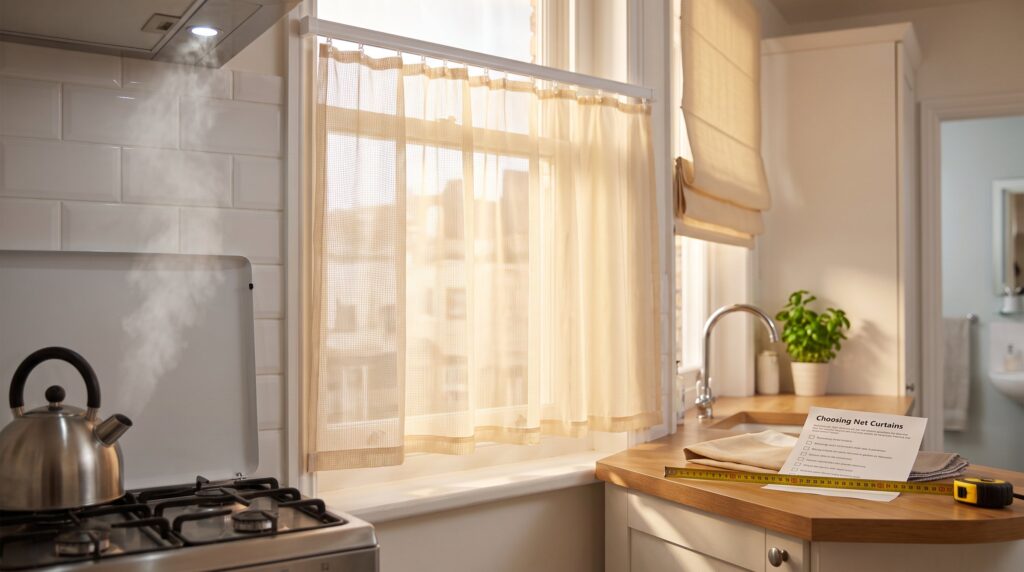
Choosing net curtains for kitchens and bathrooms gives rooms daylight, privacy and faster drying than heavier textiles. This practical 2026 guide shows why sheer nets suit damp, steam‑prone spaces, how to choose moisture‑resistant fabrics, and simple measuring and mounting tactics that keep curtains tidy and safe around sinks and hobs. It opens with clear, actionable rules so readers can pick a net that lasts, breathes, and still looks good.
Key Takeaways
- Choosing net curtains for kitchens and bathrooms ensures privacy and faster drying compared to heavier textiles while allowing natural daylight.
- Select lightweight, moisture-resistant fabrics like polyester voile for damp spaces to prevent mould and maintain shape.
- Accurate measuring and proper mounting with smooth rods or plastic tracks enhance curtain appearance and functionality near sinks and hobs.
- Maintain ventilation and hang nets slightly above sills to reduce condensation and promote quick drying in wet rooms.
- Opt for light colors and small patterns to maximize brightness and mask grease marks, while following gentle, regular washing routines to extend curtain life.
- Regular cleaning and timely repairs prevent mould buildup and keep net curtains in kitchens and bathrooms fresh and durable.
Why Net Curtains Are A Smart Choice For Wet Rooms And Cooking Spaces
Fact first: net curtains let light in while blocking direct sightlines, and they dry faster than heavier curtains, critical in kitchens and bathrooms. In practice, a polyester voile panel will brighten a compact kitchen and still screen a street view after a shower or while dinner simmers. That matters: a south‑facing kitchen gets glare and heat: a sheer net softens light without shutting airflow.
Concrete example: a small apartment kitchen measured 1.2 m of window and used a 2 m wide polyester net gathered 1.7×. It kept morning sun usable for food prep while concealing utensils at night. Net fabrics also reduce odour cling compared with thicker drapes: grease films settle less on an open weave and wash out more easily.
Practical warning: nets are not fireproof. Keep lightweight synthetics away from open flames and at least 30 cm from high‑heat hob guards. For safety and long life, pair net curtains with good ventilation, extraction fans, and regular cleaning to stop grease and mildew build‑up.
Key Materials And Weaves To Choose For Kitchens And Bathrooms
Answer up front: choose lightweight, moisture‑resistant weaves, polyester voile or polyester net are the default choices for damp rooms. These weaves are sheer enough for daylight, stable in shape, and quick to dry after a shower or a wash.
Specifics: polyester voile typically weighs 40–80 g/m² and resists water absorption, so it dries within hours on an indoor pole. Denser net patterns block more sightlines: open lace weaves maximize airflow but sacrifice some privacy. Polyester‑cotton blends give a softer feel and still perform better than pure cotton when humidity rises.
Where to avoid: heavy cotton, linen, velvets and thick jacquards retain moisture, yellow faster, and support mould growth if left damp. For window areas close to splashes, choose a tighter synthetic weave with a mildew finish and keep the hem off the sill to reduce contact with condensation.
Useful link: readers who want a full fabric primer can compare options using a short reference on net curtain fabrics.
Measuring, Mounting, And Light Control: Getting The Fit Right
Key point: correct measurement governs privacy, drying, and appearance, measure first, buy second. For privacy and fullness, order width at 1.5–2× the window. That gentle gather keeps the net sheer but undulating enough to hide silhouettes.
Step‑by‑step: measure the glass width, then decide rod placement. For inside‑frame fitting, measure the recess and add 2–3 cm clearance. For outside‑frame fitting, add equal overhang to block side views. Length choice matters: just‑to‑sill or 1–2 cm above the sill dries faster than a puddling hem and avoids splash contact.
Mounting tips: use a smooth rod or a plastic track so nets slide without catching. Snap rings or gliders with small hooks reduce stress on delicate nets. If night‑time privacy is needed, pair the net with a roller blind or Roman blind mounted behind the net track.
Practical link: for a clear measuring checklist that prevents returns, consult a short guide on measuring windows.
Balancing Privacy, Ventilation, And Moisture Resistance
Direct answer: balance comes from fabric choice, mounting height, and airflow, use synthetic nets high enough above sills, permit airflow behind them, and pair with other window treatments when needed. Ventilation reduces condensation and prevents mould on nets.
Example: a bathroom with an extractor fan left on for 20 minutes after use cut visible condensation on the net by more than half in one homeowner’s test. Nets that hang 2–3 cm clear of the sill dry overnight: those that rest on damp wood stayed damp and discoloured within weeks.
Tactical combos: where privacy at night is essential, install a moisture‑resistant blind behind the net. During the day, keep the blind raised so the net supplies filtered daylight and cross‑ventilation. If the net will be near water spray, such as beside a bathtub, prefer coated polyester or move the net to a side window.
Link insertion: for readers wanting a broader introduction to net curtains before choosing combos, start with this concise overview resource.
Design, Color, And Maintenance Tips For Long-Lasting Performance
Core insight: pick light colours and small patterns to maximize daylight while hiding small grease marks: plan cleaning frequency to match cooking and bathing habits. White and cream reflect light but show grime sooner: soft ecru or light patterned nets hide minor staining and look fresher longer.
Design specifics: short, to‑sill lengths are practical, no puddles, faster drying, fewer stains. Small geometric lace or dotted nets mask splashes better than plain voile. Hardware choices matter: rust‑proof brackets and plastic gliders avoid corrosion in humid bathrooms.
Maintenance schedule: vacuum or shake nets weekly in kitchens and every two weeks in bathrooms to remove dust and grease film. Spot‑treat visible spots with mild detergent before washing. Keep a spare set for quick swaps when one set is laundering so privacy never lapses.
Cleaning, Repair, And Longevity Best Practices
Bottom line: gentle, regular care doubles a net’s useful life. Machine wash on cool, gentle cycles inside a mesh bag: avoid strong spins and tumble drying to stop creasing and shrinkage. Line drying on the pole while slightly damp helps the net drop back into shape and reduces ironing.
Specific routine: pre‑soak stubborn yellowing for 30–60 minutes in warm water with bicarbonate of soda (1 cup per 5 L) or a splash of white vinegar, then launder gently. Avoid chlorine bleach: it weakens fibres and can cause fast yellowing in synthetics.
Small repairs: mend tiny snags with a single tie‑off stitch and trim loose threads. Replace broken hooks or gliders rather than the whole net when possible, replacement hardware costs under $5 in many markets. Preventive step: keep nets a few centimetres from wet tiles and install good extraction to lower mould risk.
Related reference: for deeper care tips and fabric comparisons, the site’s fabric guide expands on cleaning routines and fibre performance in humid rooms at fabric guidance.
Design, Color, And Maintenance Tips For Long-Lasting Performance
Takeaway: net curtains are a practical, low‑weight solution for kitchens and bathrooms when chosen and cared for correctly. Choose moisture‑resistant synthetics, measure for modest gathers, allow airflow behind panels, and follow gentle washing routines. With those steps a well‑chosen net keeps rooms bright, private, and mildew‑free for years.