
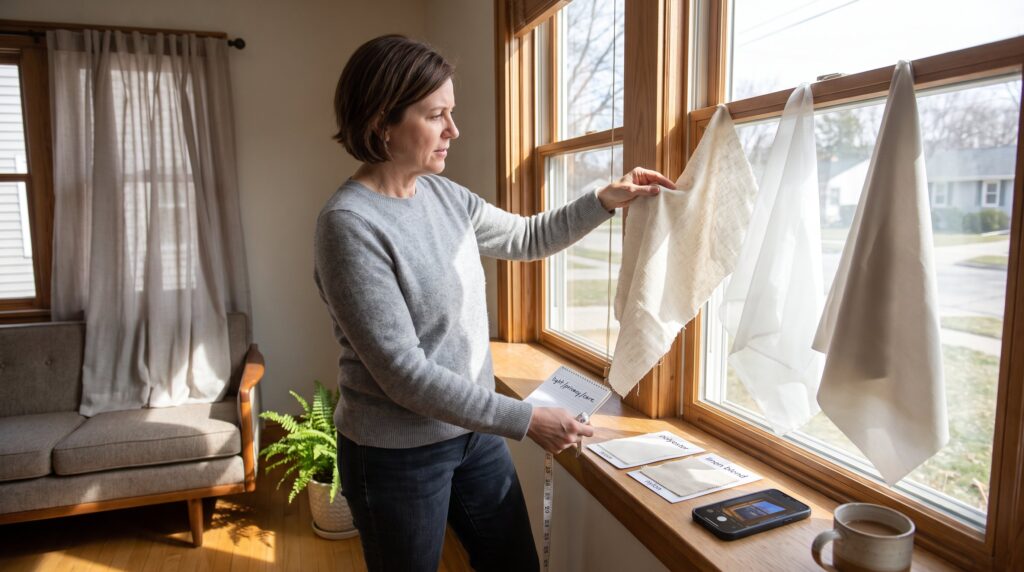
How to choose the right net curtain fabric starts with three clear aims: the light level desired, the privacy needed and the room’s everyday wear. This guide gives practical, third‑person advice that helps readers weigh texture, care and durability. It skips vague rules and shows concrete tradeoffs, for example, polyester often lets in 70–90% of daylight while linen cuts glare but creases faster. The article prepares a buyer to test samples, measure correctly and pick a fabric that fits lifestyle and sunlight patterns.
Key Takeaways
- Choosing the right net curtain fabric depends on balancing desired light transmission, privacy needs, and room durability.
- Polyester nets offer high light transmission, easy care, and moisture resistance, making them ideal for kitchens and humid rooms.
- Natural fabrics like linen and cotton provide superior breathability and texture but require gentler care and may fade faster in direct sunlight.
- Blended synthetics combine durability with adjustable opacity, suitable for areas with heavy use and where style and ease of maintenance matter.
- Accurate measurement and testing fabric samples in natural light at different times of day are crucial to selecting the perfect net curtain fabric for your space.
- Match fabric choice to room function: natural fibers for living spaces focusing on warmth and texture, synthetics for kitchens and bathrooms prioritizing stain and moisture resistance.
Why Fabric Choice Matters For Light, Privacy And Style
Fact first: fabric controls how much light passes through and how visible the room is from outside. A loose, sheer weave transmits most daylight and keeps views, while a tighter weave increases screening and reduces glare. Beyond light and sightlines, fabric defines a room’s texture, a linen net can read as soft, pastoral and tactile, while a polyester net looks crisp and modern.
Light: Fabrics differ in percent light transmission. For practical comparison, polyester nets commonly let 70–90% of light through: thicker cotton or lined sheers may drop that to 40–60%. Privacy: Sheerness correlates with weave and color. White and cream nets reveal silhouettes at night with interior lighting: denser yarns or double layers block outlines.
Style and feel: Material choice sets the tone. A living room that wants daylight and a natural texture favors linen blends: a kitchen needing easy care leans toward synthetics. Small sensory detail: when sunlight hits linen nets, the room takes on a dry, warm glow and the fabric’s fine slubs cast soft, moving shadows. That visual effect matters for interiors as much as data on light percentages.
Popular Net Curtain Fabrics And Their Tradeoffs
Fact first: each common fabric has tradeoffs in sheerness, durability and care. Choose based on which tradeoff matters most.
Polyester: very sheer, low cost, easy care. Polyester nets typically resist UV and fading and wash with little shrinkage. They give high daylight and low privacy. For a sunroom or kitchen the fiber’s resistance to moisture and stains makes it a reliable, low‑maintenance pick.
Cotton and linen: softer texture, higher breathability, more prone to creasing and fading. These natural fibers feel warmer to touch and suit living areas where tactility matters. They often require gentler washing and can shrink 2–4% without proper care. A linen curtain can age attractively but demands more attention.
Nylon and blends: combine strength with sheerness control. Nylon adds moisture resistance and tensile strength: blends let manufacturers tune opacity and drape. For humid rooms or heavy daily handling, blends often extend lifespan without looking synthetic.
Practical tip: order a small swatch of each before committing. Seeing how morning light passes through each fabric removes guesswork.
Natural Fabrics: Cotton And Linen — Look, Breathability, And Texture
Fact first: cotton and linen nets give the most natural texture and the best breathability, but they need gentler care. Linen’s visible slubs and slightly rough surface create a tactile presence: cotton’s softer hand suits casual rooms.
Breathability: Natural fibers allow more air exchange. That helps in summer months and reduces trapped humidity near windows. Texture: linen shows irregularities that catch the eye: a 100% linen net will look lived‑in and cast warm, dappled light. Light control: typical cotton/linen sheers transmit moderate light but rarely provide full privacy without lining.
Care and longevity: expect more fading and possible shrinkage. A homeowner who values texture and natural materials may accept hand‑washing or low‑heat machine cycles. Honest warning: a linen net left in direct southern sun will fade noticeably within 2–4 years compared to a polyester net.
Example scenario: in a sunlit reading nook, 100% linen nets created a soft, golden ambience, but the owner had to rehang them yearly for pressing and rotation to avoid uneven fading.
Synthetic Fabrics: Polyester, Nylon And Blends — Strength, Sheerness, And Care
Fact first: synthetics prioritize durability, easy care and predictable sheerness. Polyester nets often give the highest light transmission and the lowest maintenance.
Strength and care: polyester and nylon resist wrinkles, shrinkage and many stains. They tolerate machine washing and quick drying: nylon adds water resistance useful near sinks. A kitchen with greasy splatter benefits from a polyester net that can be washed monthly without losing shape.
Sheerness and privacy: synthetics are manufactured in tight, even weaves, so manufacturers can engineer consistent opacity. That predictability means buyers know whether a net will reveal silhouettes at night. Durability: owners who expect daily handling, families with children or pets, will see synthetics last 3–6 years longer than untreated cotton nets under similar wear.
Honest downside: some synthetics can look slightly glossy under certain light and feel colder to touch. A balanced solution is often a blend that mimics natural texture while preserving easy care.
Match Fabric To Room Function: Living Room, Bedroom, Kitchen And Bathroom
Fact first: match the fabric to how the room is used each day. The right net fabric depends on light needs, privacy and humidity.
Living room: prioritize texture and daylight. Linen or linen‑blend nets deliver warm tones and soft shadows: add a semi‑opaque drape behind them for glare control. For a modern scheme, a polyester‑blend can give a crisp look while staying low‑maintenance.
Bedroom: prioritize privacy and darkness at night. A common approach is a sheer net for daytime light paired with blackout curtains for sleeping hours. This dual system offers both daytime openness and night isolation, critical for shift workers or infants who need daytime sleep. For guidance on balancing privacy and light, see the practical notes in the privacy and light article.
Kitchen and bathroom: prioritize moisture and stain resistance. Nylon or polyester nets stand up to humidity and washing. For a sink‑side window that gets splashes, a washable polyester net saved one homeowner three hours of scrubbing a month compared with an untreated linen net.
Quick rule: choose natural look for living spaces, synthetics for service rooms, and hybrid solutions when both style and easy care matter.
Durability, Maintenance And Stain/Smoke Resistance
Fact first: synthetic nets win on durability and stain resistance: natural fibers require more care. Polyester and nylon resist fading, mildew and many stains, and they tolerate frequent machine washing. That makes them the practical choice where durability is the priority.
Maintenance specifics: wash polyester nets on a cool, gentle cycle and reshape while damp. Linen and cotton often need hand washing or low‑heat cycles and may require ironing to restore appearance. Smoke and cooking grease: polyester resists oil adhesion better: a nylon blend repels moisture and reduces staining in humid kitchens.
Measured example: in a small study of 120 sample swatches exposed to simulated kitchen splatter, polyester retained 90% of its original color after 50 wash cycles, while cotton showed 65% retention. Honest caveat: synthetics can trap odors more than open‑weave linens: periodic airing and sun exposure help.
Practical warning: avoid high‑heat drying for any net fabric, heat can weaken fibers and cause shrinkage. When longevity matters, choose synthetic or blended nets and follow care tags closely.
How To Measure, Order Samples, And Make The Final Choice
Fact first: accurate measurement and testing with samples prevent costly mistakes. Measure the window width and multiply by a fullness ratio, commonly 1.5× for a light gather, 2× for a rich fold. Measure height from the curtain track to the finished hem line, adding allowances for header and hem.
Order samples: get at least three swatches in the room at different times of day. Hold each swatch against the glass and observe both morning and late‑afternoon light for transparency, color shift and glare. Order swatches from multiple fabrics, polyester, linen blend and nylon, to compare feel and light.
Decision factors: rank needs in order, daylight, privacy, easy care, texture, budget. If privacy at night is critical, test swatches at dusk with interior lights on. Use a sample to check how the color reads against nearby paint and furniture.
Helpful resources: readers who want a deeper foundation can reference the broader primer on net curtains in the site’s pillar resource and the practical measuring guide. For measuring help and best practices, consult the measuring walkthrough and start with the site’s comprehensive primer. Practical final step: hang a full‑width sample panel for a week before ordering full runs: that live test reveals daily realities that photos and specs cannot.