
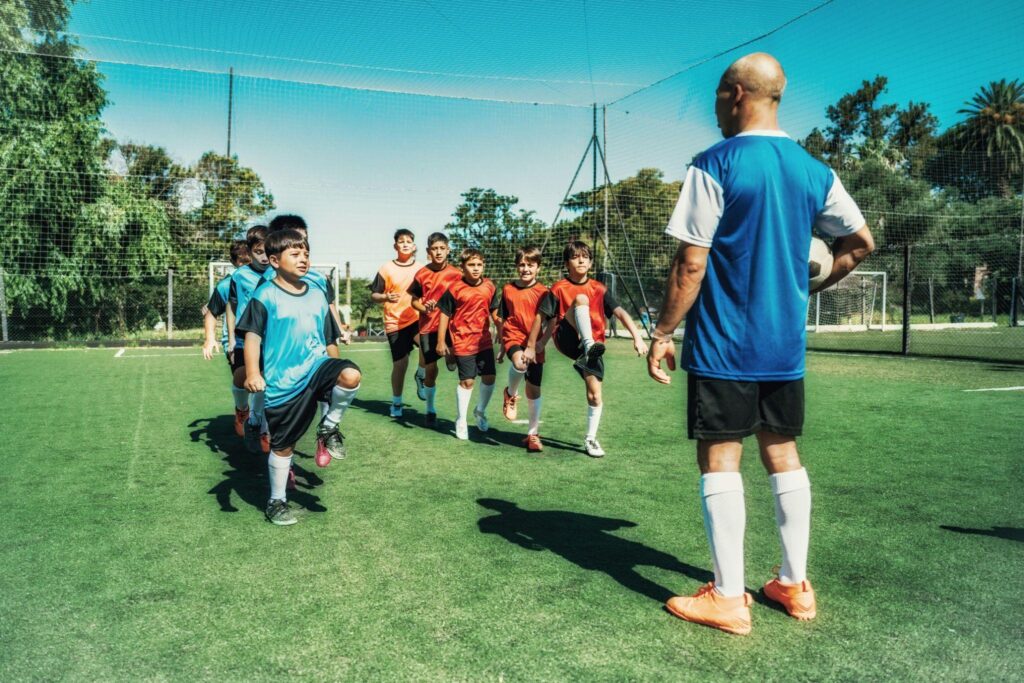
You’ve decided it’s time for your child to try a sport, and now you’re staring at a list of options that all claim to be perfect for beginners. Swimming, gymnastics, tennis, basketball, martial arts, and somewhere in every conversation with other parents, soccer keeps coming up. There’s a reason for that. Across almost every country in the world, soccer is the sport families reach for first, and it’s not just habit or popularity doing the work. The game has a set of built-in features that make it unusually kind to complete beginners, especially young ones.
That doesn’t automatically make it the right choice for your child, and it’s worth understanding what actually makes a first sport succeed or fail. But if you’re weighing up where to start, soccer earns its default status honestly, and knowing why helps you make the call with more confidence.
The Rules Make Sense to a Five-Year-Old
Watch a group of children encounter soccer for the first time and you’ll see something that doesn’t happen with most other sports. Nobody needs the game explained. Kick the ball into the goal. That’s the entire concept, and a child can grasp it in the time it takes to say it. Everything else, positions, offside, throw-ins, arrives gradually and much later, and none of it is needed to enjoy that first session.
Compare that with sports where the scoring alone requires a sit-down explanation, or where a child has to understand their specific role before the game makes any sense at all. Cricket and baseball ask kids to grasp innings and fielding positions. Netball and basketball come with footwork rules that feel arbitrary to a beginner. None of that complexity is a flaw in those sports, but it does mean a young child spends their early sessions confused, and confusion is the fastest route to a child announcing they don’t like sport. Soccer lets kids play first and learn the details later, which is exactly the right order for building enthusiasm.
Almost No Barrier to Entry
The practical side matters just as much as the rules, and here soccer is hard to beat. The full equipment list for a beginner is a ball. Not a racquet sized to their height, not pads and a helmet, not a uniform with specialised shoes before they’ve even confirmed they like the game. A ball, any patch of grass or even a hallway, and two jumpers for goalposts. The cost of finding out whether your child enjoys soccer is close to zero.
Just as important is what soccer doesn’t require physically. At junior level, there’s no meaningful advantage in being tall, heavily built, or unusually strong. Small quick kids thrive, bigger kids thrive, and children of every shape find a way of playing that suits them. That’s not true of every sport, and children notice quickly when their body type puts them at a disadvantage. Soccer’s evenness on this front means fewer kids rule themselves out early, and fewer parents watch a child get discouraged for reasons that have nothing to do with effort.
Constant Involvement Keeps Beginners Engaged
Here’s the feature parents appreciate most once they’ve seen a few different sports up close. In soccer, everyone is involved nearly all the time. The game flows continuously, the ball moves everywhere, and even a child playing their very first match will run, chase, kick and touch the ball repeatedly. There are no long stretches of standing in a far corner of a field hoping nothing comes your way, and no waiting through an entire innings for a single turn.
For young children, this is close to everything. Attention spans are short, and a first experience of sport that consists mostly of waiting teaches a child that sport is boring. Soccer’s constant motion means kids are physically busy for the whole session, which keeps them engaged, burns real energy, and sends them home with the tired-and-happy feeling that makes them want to go back. First impressions of sport tend to stick, and soccer’s first impression is motion, involvement and touches of the ball rather than queues and instructions.
Easy Ways to Start Without a Season Commitment
The other advantage of soccer is how many low-commitment entry points it offers. You don’t need to sign up for a full club season to find out if the interest is real. Start in the backyard or the park with a cheap ball and see whether your child keeps asking to play. Casual kickabouts with friends or cousins tell you plenty, and many communities run come-and-try sessions where kids can join in with zero obligation.
If you want something more structured before committing to a season, a soccer school holiday program is one of the most efficient ways to test the water. A few consecutive days of coaching, games and other beginners gives your child a concentrated dose of the sport, enough to come home either asking when they can play again or clear that it’s not for them. Both answers are useful, and either way you’ve learned it in a week rather than discovering it three payments into a season.
Whichever entry point you choose, keep the framing light. This is an experiment to find out what they enjoy, not a commitment they need to justify.
When Soccer Isn’t the Right First Sport
For all of that, soccer isn’t universal, and it’s worth being honest about the kids it doesn’t suit. The same constant motion that engages most children overwhelms some. A child who dislikes crowds, noise, or the mild chaos of twenty kids chasing one ball may find the whole experience stressful rather than fun. Some children are simply wired for individual pursuits, where progress is theirs alone and nobody else’s mistakes affect their game. Swimming, gymnastics, athletics and martial arts all serve those kids brilliantly.
If your child tries soccer and bounces off it, that’s information, not failure. The point of a first sport isn’t to find the one they’ll play forever. It’s to give them a good first experience of moving, trying and improving, so that the second and third sports get a fair hearing too. Soccer earns its place as the usual starting point because it gives the most kids the best odds of that good first experience. If your child turns out to be one of the exceptions, you’ve lost nothing but the price of a ball.