
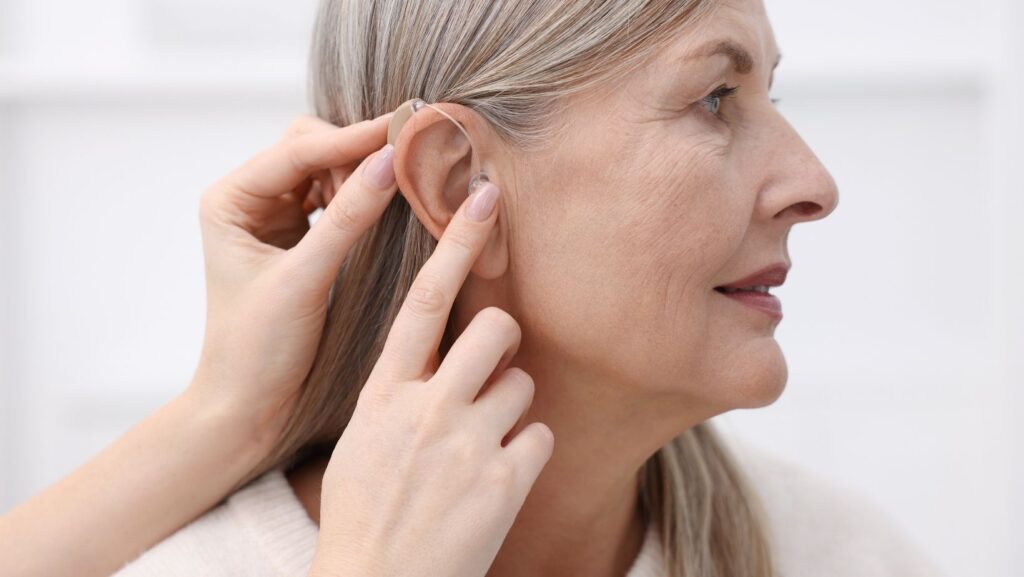
Hearing is easy to take for granted because it’s “always on.” Unlike vision, you can’t blink your ears. Sound feeds your brain a constant stream of information about language, mood, distance, danger, and connection. So when hearing starts to slip—gradually, often quietly—the impact rarely stays confined to the ears. It shows up in energy levels, relationships, work performance, balance, sleep, and even long-term brain health.
The good news is that hearing loss is one of the most modifiable health issues adults face. But it requires treating hearing as part of whole-body wellbeing, not a standalone sense.
Hearing Is a Brain Process, Not Just an Ear Function
We talk about “the ears” as if they do the job alone. In reality, the ears capture sound, but the brain does the heavy lifting: separating voices from background noise, filling in gaps, recognizing patterns, and attaching meaning and emotion. That’s why early hearing changes can feel like mental fatigue rather than obvious “deafness.”
The hidden effort of “listening harder”
When sound signals become muffled or incomplete, the brain compensates. You might find yourself:
- Feeling drained after social gatherings
- Struggling in restaurants despite “hearing fine” one-to-one
- Misunderstanding speech, especially higher-pitched voices
- Needing subtitles more often, even at normal volume
This isn’t a character flaw or “not paying attention.” It’s cognitive load. Your brain is working overtime to decode a signal that used to come effortlessly.
Social Connection and Emotional Health Take a Hit
Hearing loss has a uniquely social footprint because conversation is the glue of everyday life. When you miss pieces of speech, you miss jokes, names, details, and subtle cues like tone. Many people adapt by nodding along, avoiding group settings, or letting others do the talking. Over time, that can shrink your world.
Why it can look like anxiety or low mood
People often describe early hearing difficulties as embarrassment, irritability, or feeling “out of sync.” That’s understandable: it’s stressful to constantly guess what’s being said, then worry you’ll respond incorrectly. Avoidance can follow—and isolation is a known risk factor for poorer mental health.
If any of this sounds familiar, it’s worth getting a baseline hearing assessment sooner rather than later. A reputable clinic can help you determine whether the issue is hearing sensitivity, earwax, tinnitus, or sound processing challenges. In London, services like VIP Hearing Clinic London are one example of where people can start with a professional evaluation and clear next steps—especially useful when symptoms are subtle and you’re not sure what you’re noticing.
Hearing and Cognitive Health: What the Research Is Pointing Toward
One of the most important shifts in hearing healthcare over the last decade is how seriously clinicians take the link between hearing and cognition.

Large observational studies have associated untreated hearing loss with increased risk of cognitive decline and dementia. While hearing loss doesn’t “cause” dementia in a simple, direct way, several plausible pathways explain why the relationship keeps showing up in research:
Possible mechanisms behind the connection
Reduced brain stimulation: When auditory input drops, the brain regions involved in sound processing may become less active, and other networks have to compensate.
Increased cognitive load: If more mental resources are spent decoding speech, fewer are left for memory and higher-order thinking in the moment.
Social withdrawal: Less conversation and engagement can reduce cognitive stimulation over years.
The takeaway isn’t meant to be alarming. It’s practical: addressing hearing early may support healthier aging. Whether that means hearing aids, assistive listening devices, tinnitus strategies, or simply hearing protection, intervention is not just about volume—it’s about maintaining access to daily life.
Balance, Falls, and the “Invisible” Role of the Inner Ear
Not all hearing problems are purely about hearing. The inner ear also houses the vestibular system, which helps regulate balance and spatial orientation. That’s why some people with inner-ear disorders experience dizziness, vertigo, or unsteadiness alongside hearing changes.
Why this matters beyond discomfort
Falls are a major health risk as we age, and even mild balance issues can make people less active. Less movement can then affect cardiovascular fitness, joint health, confidence, and independence. If you’ve noticed new unsteadiness, don’t chalk it up automatically to “getting older”—especially if it’s paired with ear fullness, ringing, or hearing changes.
The Workplace Impact: Communication, Confidence, and Fatigue
In many jobs, productivity depends on rapid communication: meetings, calls, quick clarifications, and informal chats. Even minor hearing difficulties can create friction.
Common work scenarios where hearing loss shows up
- Video calls where audio quality varies and lips aren’t visible
- Open-plan offices with constant background noise
- Meetings with multiple speakers and cross-talk
- Safety-critical environments where alarms and cues matter
The result can be miscommunication, repeated follow-up questions, or a tendency to stay quiet—none of which reflects a person’s competence. If you’re managing a team, it’s worth normalizing hearing-friendly practices: good microphones, written summaries, quieter meeting rooms, and a culture where asking for repetition is accepted.
Practical Steps to Protect Hearing (and Everything Connected to It)
You don’t need to wait for a major problem to take hearing seriously. Small, consistent habits make a difference.
1) Treat hearing check-ups like vision check-ups
If you’re over 50, have tinnitus, work in noisy environments, or have a family history of hearing loss, routine testing can catch changes early. Baseline results are valuable even when everything looks normal.
2) Use hearing protection strategically
Noise-induced hearing damage is cumulative. Think power tools, concerts, gyms with loud music, and prolonged headphone use. High-fidelity earplugs can reduce volume without making music muddy—useful for people who avoid earplugs because they “ruin the sound.”
3) Audit your listening environments
Position yourself with your back to a wall in noisy venues, choose quieter restaurants, and reduce competing sound at home (TV on while someone talks is a classic culprit). These small changes lower listening effort.
4) Don’t ignore tinnitus or sudden changes
Persistent ringing, one-sided hearing loss, sudden muffling, or vertigo are all reasons to seek professional guidance promptly. Some causes are time-sensitive.
Hearing Health Is Quality of Life—In the Broadest Sense
If there’s one idea to keep, it’s this: hearing isn’t merely about detecting sound; it’s about staying connected—to people, to work, to movement, and to your own sense of ease in the world. When hearing falters, the effects often ripple outward in ways that are easy to misinterpret: fatigue, withdrawal, “brain fog,” frustration.
Pay attention to the early signs, get a proper assessment, and take prevention seriously. Your ears will benefit—but so will your relationships, your confidence, and your long-term health.