
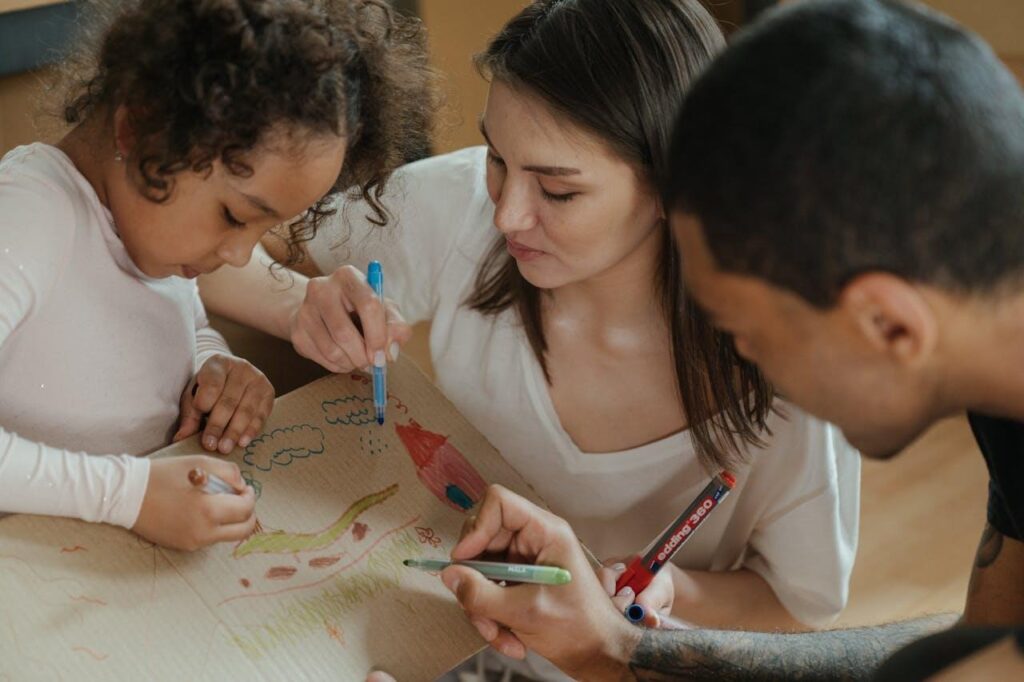
To build good relationships, mutual respect is vital. Respect is key to healthy communication with partners, our family, our coworkers and our friends. When people respect us, we tend to respect them back, showing courtesy, appreciation and consideration.
Parents expect our children to be respectful of us and other people as well. However, to build a healthy relationship with our kids and help them develop into positive, happy, and capable adults, parents need to show their children respect as well.
Dr. Hassan Alzein, board-certified pediatrician at Alzein Pediatrics in Evergreen Park and Oak Lawn, Illnois, says, “Mutual respect is the backbone of effective parenting. When we want kids to follow our values and rules, listen, and most of all, engage in honest conversation, we need to treat children as individuals, as whole people. Parents and other caregivers should acknowledge and respect children’s feelings, encourage and talk through cooperation, and build their children’s self-confidence. By modeling these behaviors in your interactions with your children, they will eventually model the same behaviors towards you and others.”
Of course, says Dr. Alzein, “There are some important rules that all kids need to follow: don’t run in the street, don’t hit others, don’t bully. But lots of rules are negotiable. Giving your child the freedom to select their own clothes to stay comfortable is more important than always having matched outfits. If your child will only sleep on the floor instead of in their bed, really, that is okay as long as they are getting enough sleep.”
Accept and Acknowledge Your Kid’s Feelings
Children’s behavior is overwhelmingly based on emotions, not logic. Dr. Alzein explains, “There is no logic behind your child having a meltdown because their plate is the one with the dinosaurs instead of the one with the trains, but it’s all about emotion. As a parent, it helps to accept that this meltdown is happening over something that your child considers quite serious, even though you may think it’s meaningless.”
Show your child empathy, Dr. Alzein recommends. “Use language to describe their feelings so that they know how to identify their emotions. Say, “I know you feel really disappointed when you thought you would eat from the train plate and you were given the dinosaur plate. That makes you feel frustrated.” Talking about the problem from their point of view can deescalate the situation and help your child feel you are both on the same team together.”
Get Rid of Punishments
Punishing a child by putting them in time-out over and over each day may correct a behavior for a little bit, but it will lead to bigger problems and a negative relationship with you in the long term. Kids don’t learn any lessons by being punished – instead they come to believe they are inherently bad or wrong and that they can’t change their behavior.
“When your child unwinds all the toilet paper, describe to your child what you are seeing and the problem it presents,” says Dr. Alzein. “You can say, “I understand that roll is fun to spin and the paper everywhere seems like a party, but it’s wasteful and makes a huge mess. That makes me feel tired and disappointed.” That’s a big difference from “What are you doing?! Toilet paper costs a lot of money!”
After you finish talking to your child about the behavior and your feelings, you can brainstorm solutions together. Is the toilet paper roll too loose? Is it difficult to know how much to use? Would it be easier if we counted the amount of sheets necessary to use? If you listen to your child about why they engaged in certain behavior, you will often find that they weren’t trying to be “bad,” they are still in the process of figuring things out.”

Encourage Independence and Self-Confidence
The goal of raising children is to have them become independent, competent people, separated from their parents. “This separation starts almost immediately, marked by every milestone, beginning in infancy and continuing through teen years to adulthood,” says Dr. Alzein. He recommends giving children parent-approved choices as early as possible and then respecting their decision. For example, when it’s time to get ready for school, you might ask “do you want to brush your teeth first or wash your face first?” Either decision accomplishes the goal of getting your child cleaned to meet the day, but they will know the method to get there was their choice and are more likely to cooperate.
Letting your child struggle a little when learning new tasks boosts their self-confidence. “It can be difficult when you’re watching the clock or feeling badly when they start becoming frustrated,” says Dr. Alzein. “Take a breath. Give yourself a moment to be patient. Be there to provide support and encouragement, but don’t take over and do it for them. They need to learn how to accomplish the task themselves. They will also get more frustrated and defeated if parents make everything appear simple.” He recommends that, instead of saying “Zipping up a jacket is easy – you can do it!”, parents say, “Zipping your jacket is difficult at first, but let’s give it another try. If it doesn’t work this time, then maybe I can help you line up the zippers.” You are acknowledging that learning new skills can be tough, but you have confidence in their ability to succeed, while offering help if they’re not ready to do it right now,” notes Dr. Alzein.
Wouldn’t parenting be a joy if our kids, at all ages, just did what they are told to do? Dr. Alzein says while that’s bliss to imagine, unquestioning obedience is not healthy. “It wouldn’t encourage children to develop their own thoughts, learn how to express themselves, or understand what it means to be treated with respect – and treat others with respect – when they are adults.”
Dr. Alzein says, “The interactions children have with their parents, from the very youngest of ages, shape their interactions with peers, teachers, coworkers, friends and family as they grow. The healthier, more effective and more communicative your kids are with you, the better their relationships will be in every phase and segment of life.”