
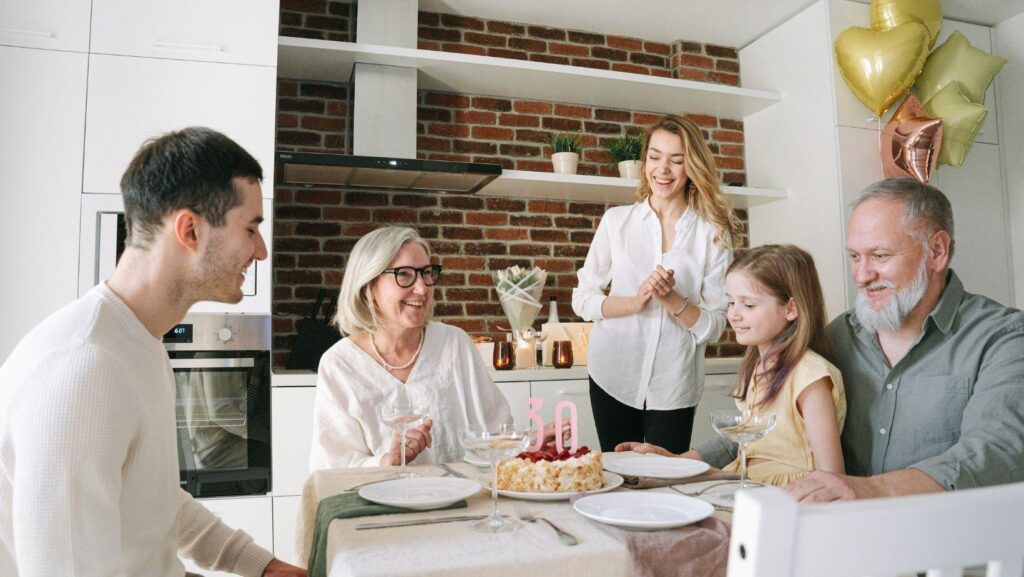
Some of the most memorable family occasions are not the ones with the biggest guest lists or the most elaborate decorations. They are the moments when people come together, share stories, take photographs, and celebrate an important stage in someone's life. A new baby, a naming ceremony, a christening, or a child's first birthday can all become meaningful occasions without requiring an expensive venue or a complicated plan.
The secret often lies in the details. A welcoming home, a thoughtfully arranged table, comfortable seating, personal decorations, and a few keepsakes can make a gathering feel special while keeping the focus on the people attending. When these elements work together, even a small family celebration can feel carefully planned and genuinely personal.
For hosts, the challenge is finding the right balance between creating a beautiful setting and managing the practical responsibilities that come with entertaining. With a little preparation, it is possible to make guests feel comfortable, create a pleasant atmosphere, and preserve the memories without stretching the budget.
Start With the Feeling You Want to Create
Before choosing decorations, invitations, or food, think about the atmosphere you want the celebration to have. A relaxed gathering with close relatives will require a different approach from a larger christening reception or a family party with many young children.
For a small gathering, the emphasis might be on conversation, shared food, and spending time together. A larger event may need clearer seating arrangements, a designated place for gifts, and enough room for guests to move around comfortably. Deciding on the general feel of the occasion early makes it easier to choose details that work together.
It also helps to avoid buying decorations simply because they look attractive individually. A collection of unrelated colours, patterns, and accessories can make a room feel crowded, particularly when the space is already being used for dining and socialising. Choosing a simple palette and repeating a few details throughout the room often creates a more considered result.
Think about what matters most to the family, too. Some people enjoy beautiful photographs, while others care more about traditional food, religious customs, music, or the opportunity to bring relatives together. Allowing those priorities to guide the plans makes the occasion more personal than copying a celebration seen online.
Make Your Home Feel Welcoming Before Guests Arrive
A comfortable setting does not require a complete home makeover. Often, a little preparation makes a greater difference than buying new furniture or decorative accessories.
Start with the areas guests will use most, including the entrance, living room, dining space, and bathroom. Clear unnecessary clutter, make sure there is somewhere to place coats and bags, and arrange seating so that people can talk without having to move furniture around. If children are attending, leave enough space for them to move safely between activities.
Natural light can help a room feel open and inviting during daytime gatherings. Clean windows, freshly arranged curtains, and uncluttered window sills allow daylight to become part of the room's atmosphere. Lightweight window coverings can soften strong sunlight while maintaining a bright appearance, making them useful in spaces where guests will be sitting for several hours.
Do not overlook small practical details. Having extra cups, tissues, hand towels, and a convenient place for rubbish can make hosting much easier. These items rarely feature in celebration photographs, but they help the event run smoothly and allow the host to spend more time with family.
Use Simple Decorations That Bring the Room Together
Decorations can help establish the mood of an event, but they do not need to fill every available surface. A few carefully chosen details usually have more impact than a large collection of unrelated ornaments.
Flowers, candles used safely, fabric table runners, framed photographs, and coordinated tableware can all contribute to a welcoming setting. Choose decorations that suit the size of the room rather than overwhelming it. A small dining table may only need a simple centrepiece, while a larger reception space can accommodate several arrangements.
Colour is an easy way to create consistency. Soft neutrals paired with one or two accent shades can work well for family celebrations, although brighter colours may be more appropriate for a lively children's party. Repeating the same colours in invitations, table decorations, napkins, and small display areas helps the setting feel connected without requiring everything to match exactly.
It is also worth considering what happens after the event. Reusable decorations can be stored for future birthdays, anniversaries, and family gatherings, while fresh flowers or a small arrangement of family photographs can continue to be enjoyed once the guests have left. Choosing versatile items helps reduce waste and makes decorating more economical over time.
Choose Gifts That Reflect the Occasion
Gift-giving is often an important part of welcoming a child and celebrating family milestones. However, choosing something meaningful can be difficult when the child is too young to express personal preferences and the parents may already have received many practical essentials.
The occasion itself can provide a useful starting point. Some families appreciate presents that become keepsakes, while others prefer practical items that can be used during the baby's early years. A thoughtful choice takes account of the family's preferences, the nature of the celebration, and whether the gift is intended to be used now or kept for the future.
For a religious milestone, christening gifts can be chosen to reflect the significance of the occasion while giving the family something to remember it by.
Personalised keepsakes, carefully selected children's items, and meaningful mementos may all be appropriate, depending on the family's traditions and preferences. If you are unsure what would be welcome, asking a parent or close relative can prevent duplicate presents and help you choose something that suits the occasion.
A handwritten card can also make a difference. A few sincere words about the child and the milestone add a personal element that a gift alone may not convey. Years later, the family may value the message as much as the present itself.
Create a Table That Encourages Conversation
Food often becomes one of the central parts of a family gathering, but the table arrangement can influence how comfortably people interact. Guests should be able to reach what they need, speak to the people around them, and enjoy the meal without having to work around oversized decorations.
For a casual event, a buffet can be practical because it allows guests to serve themselves and makes it easier to accommodate different appetites. A seated meal may suit a smaller gathering where the family wants a more traditional atmosphere. Either approach can work well as long as the arrangement reflects the number of guests and the available space.
Keep the menu realistic. Preparing too many dishes can create unnecessary pressure, particularly when the host is also responsible for welcoming guests and looking after a young child. A mixture of homemade food and a few prepared items can make the workload more manageable without making the celebration feel less special.
Remember to consider guests with dietary requirements and children who may need simpler food options. Clear labels can be useful at larger gatherings, while a few familiar choices can help younger guests feel comfortable. The goal is to make the meal enjoyable rather than turning it into another source of stress.
Make Space for Children and Different Generations
Family celebrations often bring together people of different ages, from babies and toddlers to grandparents and older relatives. Planning with those differences in mind can make the event more comfortable for everyone.
If babies are attending, provide a suitable quiet area where parents can feed or settle them away from the busiest part of the gathering. Keep walkways clear and ensure that decorations, cables, hot drinks, and breakable objects are positioned safely. Small practical decisions can help parents relax without needing to monitor every corner of the room.
For older children, a simple activity table with colouring sheets, crayons, picture books, or age-appropriate games can provide something enjoyable to do between conversations and meals. These activities do not need to be elaborate. Giving children a suitable space of their own can make the occasion easier for adults and young guests alike.
Older relatives may appreciate comfortable seating away from loud music or busy entrances. If the event involves several rooms, make sure guests can move between them without difficulty. A thoughtful layout allows people to participate in the celebration at their own pace.
Capture Memories Without Turning the Event Into a Photo Shoot
Photographs are a natural part of family celebrations because they preserve details that might otherwise be forgotten. Yet it can be easy to spend so much time arranging pictures that the host and guests have little opportunity to enjoy the occasion itself.
A simple approach is to choose one area with good natural light for family photographs. A plain wall, a tidy corner of the living room, or a small arrangement of flowers can provide an attractive background without requiring a professional setup. Let guests take informal pictures throughout the event rather than stopping every activity for a planned photograph.
You could also invite close relatives to write a short message for the child. These notes can be collected in a memory box or scrapbook alongside a few photographs, the invitation, and a card from the occasion. Unlike digital photographs that may become scattered across different devices, a small physical collection gives the family an easy way to revisit the milestone.
When sharing photographs online, remember that not every family member will be comfortable having images posted publicly. Ask before uploading pictures of other people, particularly children, and respect the parents' preferences about privacy. Preserving memories should not come at the expense of someone's comfort.
Plan the Budget Around What Matters Most
Celebrations can become expensive when every detail is treated as essential. Venue hire, catering, decorations, outfits, photography, and gifts can add up quickly, so deciding on a realistic budget early helps prevent spending from getting out of hand.
Begin by identifying the elements that matter most to the family. If gathering relatives for a meal is the priority, allocate more of the budget to food and seating rather than elaborate decorations. If the occasion has particular religious or cultural traditions, make sure those needs are accounted for before spending on optional extras.
It is also useful to distinguish between one-time expenses and items that can be reused. A neutral table runner, serving dishes, picture frames, or simple decorative pieces may work for several different occasions. Borrowing suitable items from relatives can be another practical option, especially for decorations that would otherwise be used only once.
Avoid comparing your celebration too closely with photographs from social media. Online images often show carefully arranged moments rather than the work and expense behind them. A gathering that reflects the family's personality and allows people to spend time together can be just as meaningful as an elaborate event.
Give Guests Small Ways to Feel Involved
A celebration becomes more personal when guests have opportunities to contribute rather than simply attend. This does not mean assigning everyone a task, but small invitations to participate can create a stronger sense of connection.
Close relatives might bring a favourite family dish, share a short memory, or help organise photographs. Older children could prepare a drawing or choose a book for the new baby. Guests who live far away might send a handwritten note that can be included in a memory box.
If you are hosting, make these opportunities optional and keep them simple. People have different schedules, budgets, and levels of comfort with organised activities. A request that feels enjoyable to one person may feel like an obligation to another.
The same principle applies to gifts. Guests should not feel pressured to spend beyond their means, and hosts can make it clear that their presence is appreciated. A warm atmosphere is built through consideration and shared time, not through the number or price of presents.
Carry the Memories Into Everyday Family Life
After the guests have left and the decorations have been put away, the most valuable parts of a celebration are often the memories and relationships that remain. A photograph on a shelf, a card stored in a box, or a keepsake from the occasion can serve as a small reminder of the people who came together.
Families can build on those memories by creating simple traditions for future milestones. They might keep a record of important dates, write letters for a child's future birthdays, or take a family photograph at each major celebration. The tradition does not need to be elaborate to become meaningful.
The home itself can also help preserve those memories. A small display of photographs, a favourite framed card, or a keepsake placed on a shelf can become part of everyday surroundings without making the room feel crowded. Choosing a few items with genuine significance is often more effective than displaying everything at once.
As children grow, they may become interested in the stories behind these objects. Explaining who attended a celebration, why a particular gift was chosen, or what the family remembers about that day helps turn ordinary keepsakes into a shared family history.
A Meaningful Celebration Does Not Need to Be Complicated
The most successful family celebrations are built around the people involved rather than the amount of money spent. A comfortable home, thoughtful gifts, simple food, and opportunities for conversation can create an atmosphere that feels warm without requiring a complicated plan.
Start by considering the needs of the family and the practical realities of the space. Choose decorations that work together, make guests comfortable, and leave enough room for children and older relatives to enjoy the gathering. Plan the budget around the details that matter most instead of trying to include every possible extra.
Most importantly, allow the occasion to feel personal. A carefully chosen present, a handwritten message, or a small family tradition can carry meaning long after the celebration has ended. When the focus remains on welcoming, supporting, and spending time with loved ones, even a simple gathering can become a memory worth keeping.