
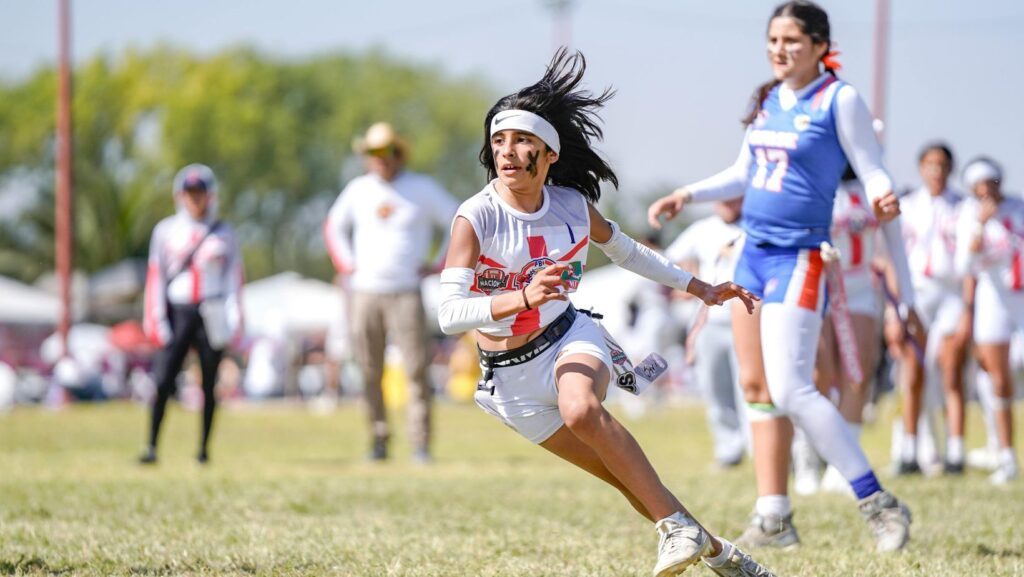
The pathway from international youth sports to American collegiate athletics has produced some of the most recognizable names in professional sports. From basketball to tennis to track and field, athletes who competed at US universities have gone on to successful professional careers while earning degrees from respected institutions. For talented young athletes outside the United States, the combination of high-level athletic competition and quality education represents a compelling opportunity.
Yet the process of qualifying for US college sports remains poorly understood by many international families. The requirements extend far beyond athletic ability. Academic eligibility, governed by the National Collegiate Athletic Association (NCAA), determines whether an athlete can compete at Division I or Division II programs regardless of their sporting talent. Athletes who fail to meet these academic requirements cannot receive athletic scholarships and cannot compete, no matter how exceptional their abilities on the field or court.
Understanding these requirements early allows families to make educational decisions that keep the US collegiate pathway open. Waiting until the final years of high school to consider NCAA eligibility often means discovering that academic choices made years earlier have closed doors that cannot easily be reopened.
The NCAA serves as the governing body for college athletics at more than 1,100 member institutions across the United States. Division I represents the highest level of competition, with the largest athletic budgets, most extensive media coverage, and greatest number of athletic scholarships. Division II offers a slightly less intense athletic experience while still providing scholarship opportunities. Division III does not offer athletic scholarships but allows students to compete while focusing primarily on academics.
For international student athletes, Division I and Division II programs represent the primary targets, as these offer the athletic scholarships that make American higher education financially accessible. Both divisions require athletes to meet eligibility standards established by the NCAA Eligibility Center, the organization responsible for certifying whether prospective student athletes meet academic requirements.
The academic requirements for NCAA eligibility involve three components: completion of required core courses, achievement of minimum grade point averages in those courses, and attainment of qualifying standardized test scores. Each component presents specific challenges for international students whose educational backgrounds differ from the American system.
Core course requirements specify that student athletes must complete a set number of courses in designated subject areas. For Division I eligibility, students must complete 16 core courses: four years of English, three years of mathematics at algebra I level or higher, two years of natural or physical science including at least one laboratory course, one additional year of English, mathematics, or natural science, two years of social science, and four additional years of English, mathematics, natural science, social science, foreign language, comparative religion, or philosophy.
Division II requirements are similar but slightly less extensive, requiring 16 core courses with a somewhat different distribution across subject areas.
For international students, the challenge lies in ensuring that courses taken in their home country educational system count as core courses under NCAA definitions. The NCAA Eligibility Center evaluates international credentials individually, determining which courses meet core course requirements based on the specific curriculum and educational system involved.
Not all courses that might seem equivalent actually qualify. The NCAA maintains specific standards for what constitutes a core course, and educational systems that structure learning differently from American high schools may not align neatly with these requirements. Students following curricula that emphasize fewer subjects studied in greater depth, or systems that allow early specialization, may find themselves short of required courses in certain areas.
This evaluation process makes curriculum choice particularly important for international student athletes. Educational programs that have been reviewed and approved by the NCAA provide families with confidence that completed courses will count toward eligibility requirements. Programs without such approval require individual evaluation, introducing uncertainty into the eligibility determination process.
Grade point average requirements establish minimum academic performance standards. For Division I, the NCAA uses a sliding scale that balances GPA against standardized test scores. Students with higher GPAs can qualify with lower test scores, while students with lower GPAs need higher test scores to compensate. The minimum GPA for Division I eligibility is 2.3 on a 4.0 scale, calculated using only grades earned in core courses. Division II requires a minimum 2.2 GPA in core courses.
International grading systems rarely align directly with the American 4.0 scale. The NCAA Eligibility Center converts international grades to the American scale using established conversion tables, but families should understand that grades considered strong in their home system may convert differently than expected. Students should aim for the highest grades possible in core courses rather than assuming their current performance will meet minimum requirements after conversion.
Standardized testing requirements add another layer of complexity. The NCAA accepts SAT and ACT scores for eligibility determination. International students must take these American standardized tests, which may differ significantly from examinations in their home educational systems. The tests are offered at testing centers worldwide, but preparation requires familiarity with American testing formats and content expectations.
The registration process itself requires advance planning. Students must create an account with the NCAA Eligibility Center and request that their school submit official transcripts and proof of graduation. International students must also provide documentation of their educational credentials in formats the Eligibility Center can evaluate. This process takes time, and delays in documentation can affect eligibility certification timing.
Timing matters significantly in NCAA eligibility. Students should register with the Eligibility Center at the beginning of their penultimate year of high school, allowing time for transcript evaluation and resolution of any issues before recruitment intensifies. Waiting until the final year creates unnecessary pressure and may result in missed opportunities if eligibility questions arise.
For families seeking to keep the NCAA pathway open, educational decisions made years before university application can determine outcomes. Selecting an educational program that aligns with NCAA core course requirements eliminates uncertainty about whether completed courses will count toward eligibility. Ensuring strong performance in qualifying courses builds the GPA foundation needed to meet sliding scale requirements. Beginning standardized test preparation early provides time to achieve qualifying scores.
Online education has emerged as a valuable pathway for international student athletes navigating these requirements. Student athletes often face scheduling challenges that make traditional schooling difficult. Training schedules, competition travel, and recovery time can conflict with fixed school schedules. Online education provides flexibility to maintain academic progress while meeting athletic demands.
Beyond scheduling flexibility, certain online schools have obtained NCAA approval, meaning their courses have been pre-evaluated and accepted as meeting core course requirements. This approval eliminates the uncertainty of individual credential evaluation and provides families with confidence that completed coursework will count toward eligibility.

CambriLearn holds both NCAA Approved and NCAA Eligible status, a distinction that matters for international student athletes. NCAA Approved status means the institution’s courses have been evaluated and accepted as meeting core course requirements. NCAA Eligible status indicates that students completing the program can qualify for NCAA eligibility certification. This combination provides international families with an educational pathway designed to meet NCAA requirements while offering the flexibility that competitive athletes require.
The school’s multiple curriculum options allow families to select educational pathways aligned with both NCAA requirements and their broader academic goals. Students can pursue internationally recognized qualifications while ensuring their coursework satisfies American collegiate athletic eligibility standards.
For student athletes with professional sporting aspirations, the American collegiate system offers advantages beyond simply continuing to compete. College programs provide high-level coaching, training facilities, competitive experience, and exposure to professional scouts. Athletes who do not ultimately reach professional levels earn university degrees that provide career foundations. The combination of athletic development and educational attainment represents a form of risk management that purely athletic pathways do not offer.
The financial dimension also merits consideration. Athletic scholarships at Division I and Division II programs can cover tuition, room, board, and other expenses at institutions where international student fees might otherwise exceed $50,000 or $60,000 annually. For talented athletes from countries where such expenses would be prohibitive, NCAA eligibility opens access to educational opportunities that would otherwise remain out of reach.
Families should approach the NCAA pathway with realistic expectations. Competition for athletic scholarships is intense. Division I programs in popular sports receive interest from far more qualified athletes than they can accommodate. Athletic talent alone does not guarantee scholarship offers. Academic eligibility is necessary but not sufficient for receiving athletic scholarship support.
College coaches recruit athletes who meet their program needs, fit their playing systems, and demonstrate both athletic and academic capability. The recruitment process typically begins during the penultimate year of high school, with coaches evaluating athletes through competition footage, in-person observation, and communication with athletes and families. Athletes must be proactive in this process, reaching out to coaches, providing highlight videos, and demonstrating genuine interest in specific programs.
Academic eligibility status affects recruitment timing and coach interest. Coaches are reluctant to invest recruiting resources in athletes whose eligibility remains uncertain. Obtaining early eligibility certification, or at minimum demonstrating clear progress toward meeting requirements, strengthens an athlete’s position in the recruitment process.
The pathway from international youth athlete to American collegiate competitor requires planning, preparation, and informed decision-making. Families who understand NCAA requirements early can make educational choices that preserve options. Those who select appropriate educational programs, maintain strong academic performance, and engage proactively with the eligibility certification process position their student athletes for success.
American collegiate athletics represents a genuine opportunity for talented international athletes willing to meet both athletic and academic standards. The combination of competition, education, and potential financial support creates possibilities available nowhere else in the world. For families committed to pursuing this pathway, understanding and meeting NCAA eligibility requirements is the essential first step.
Frequently Asked Questions
What is the difference between NCAA Approved and NCAA Eligible?
NCAA Approved status indicates that an educational institution’s courses have been evaluated by the NCAA Eligibility Center and accepted as meeting core course requirements. Students completing courses at NCAA Approved schools can be confident those courses will count toward the 16 required core courses for eligibility. NCAA Eligible status indicates that the overall educational program allows students to meet full eligibility requirements, including graduation requirements and credential recognition. An institution can be NCAA Approved for course purposes while students might still face eligibility challenges related to other requirements. Institutions holding both designations provide the clearest pathway for international student athletes seeking eligibility certification.
When should international student athletes register with the NCAA Eligibility Center?
Students should create their NCAA Eligibility Center account at the beginning of their penultimate year of high school, typically around age 16 or the start of what Americans would call junior year. Early registration allows time for transcript submission, credential evaluation, and resolution of any questions about course equivalencies or documentation. Students should request that their school submit transcripts after completing each academic year, creating a cumulative record that the Eligibility Center can evaluate. Waiting until the final year of high school to begin this process creates unnecessary time pressure and may delay eligibility certification during the critical recruitment period.
Can student athletes qualify for NCAA eligibility while following non-American curricula?
Yes, students following international curricula including British A-Levels, International Baccalaureate, and various national educational systems can qualify for NCAA eligibility. The NCAA Eligibility Center evaluates international credentials individually, determining which courses meet core course requirements based on the specific curriculum involved. However, not all courses that might seem equivalent actually qualify under NCAA definitions. Students following international curricula should verify that their specific courses will count toward core course requirements, ideally by selecting educational programs that have already received NCAA approval. Working with schools experienced in NCAA eligibility for international students reduces uncertainty in the evaluation process.